What is a Rich Snippet?
A rich snippet is a search result enhanced with extra details, such as star ratings, prices, review counts, or images, pulled from structured data markup on the page. Google now officially calls these enhancements rich results. Standard results show a title, URL, and description; rich snippets add details that help searchers judge a page before clicking.
More About Rich Snippets
Rich snippets are created with schema markup, standardized tags that tell crawlers exactly what your page contains. Valid markup makes the page eligible for an enhanced listing in search results. Eligible is the operative word: Google decides whether to show the enhancement for each individual search, and correct markup never guarantees it.
Search for a recipe and you can see what the markup buys. A plain result shows a title, URL, and two lines of text. A rich snippet shows the same listing with a 4.7-star rating, "45 min," and "320 calories" beneath the title, so searchers can judge the page before they click.
That's the honest benefit: rich snippets don't change where you rank, they change how much of the results page you occupy and how often people click. Google's John Mueller said again in April 2025 that structured data won't make a site rank better. It doesn't need to. In Google's own case study, Rotten Tomatoes added structured data to 100,000 pages and measured a 25% higher click-through rate on the enhanced pages. More clicks from the same positions means more organic traffic without ranking a single spot higher.
Rich snippets vs. rich results
The two names describe the same thing. On December 19, 2017, Google consolidated rich snippets, rich cards, and enriched results under one umbrella name: rich results. "Rich snippet" is the older term, and it stuck in everyday SEO conversation. Use the current name when you're looking anything up, though: Google's documentation, the Rich Results Test, and the enhancement reports in Search Console all say "rich results."
How to get a rich snippet
The process has 3 steps:
- Add structured data for a supported content type. JSON-LD is Google's recommended format. You can write it by hand or let an SEO plugin generate it.
- Validate the page with Google's Rich Results Test. It flags markup errors and previews how the enhancement can look.
- Wait for Google to recrawl the page. Valid markup makes it eligible, and Google chooses per query whether to show the enhancement.
For the code itself, follow our beginner's guide to schema markup, which walks through adding and testing markup step by step.
Rich snippet vs. featured snippet
The two get confused constantly, and they work in opposite ways:
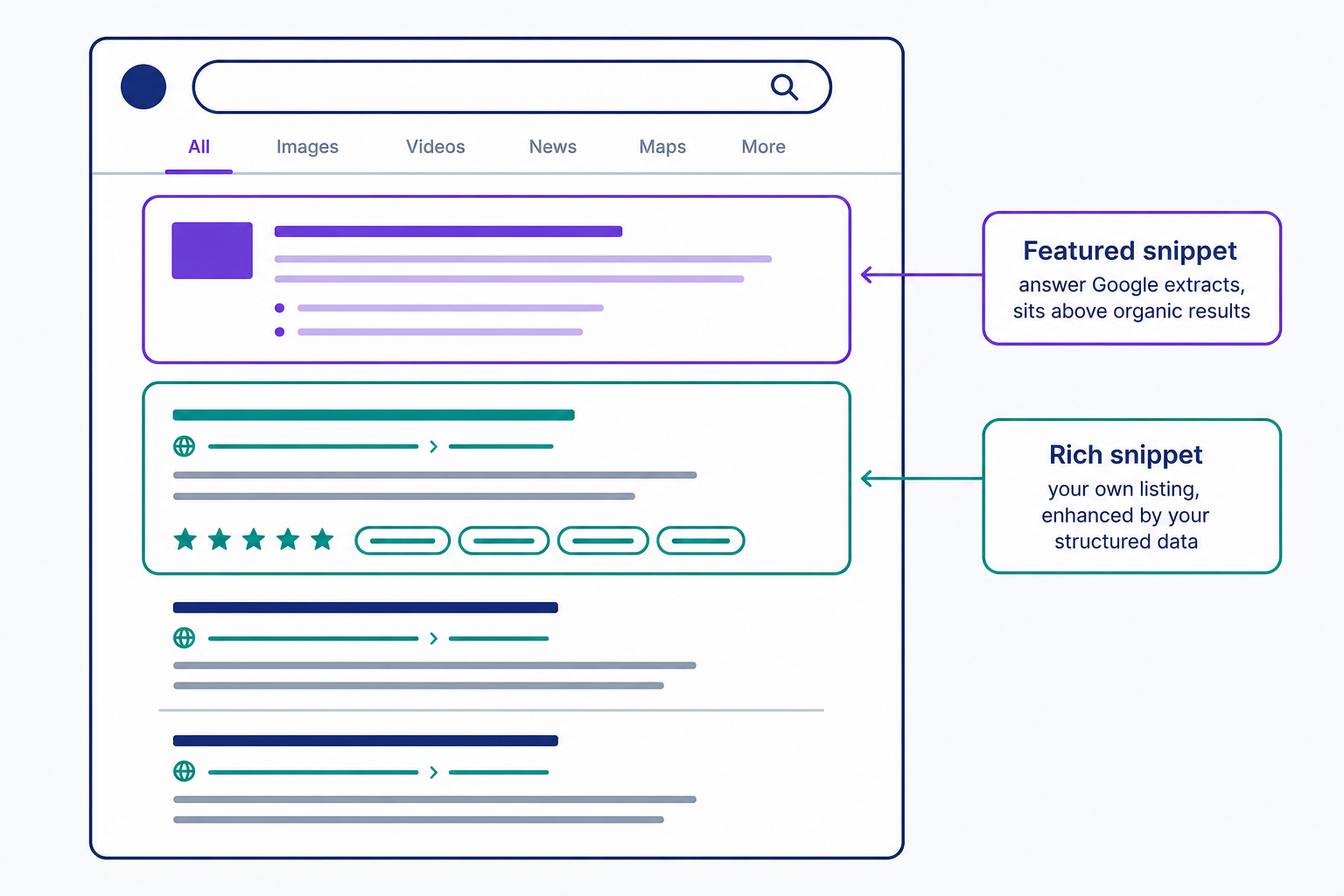
- A rich snippet is your own organic listing, enhanced with extra data such as star ratings, price, or prep time. You earn eligibility by adding structured data to your page.
- A featured snippet is the highlighted answer box Google places above the organic results, built from a passage Google extracts itself. No markup controls it.
Common types of rich snippets
Google's structured data gallery documents roughly 30 result types. These are the ones most sites use:
- Review snippet: star ratings and review counts beneath the title
- Product and merchant listings: price, availability, and shipping details
- Recipe: cooking time, calories, ratings, and images
- Event: dates, times, and venue
- Job posting: role, employer, salary, and location
- Local business: hours, ratings, and directions
- Video: thumbnails and key moments
- Article: headline and larger-than-thumbnail images
- Breadcrumb: the page's position in the site hierarchy
Supported types change. Google retired HowTo rich results in 2023, for example, and now shows FAQ rich results only for well-known government and health sites. Check the gallery for the current list before you build, then mark up the type that genuinely matches your content.
Frequently Asked Questions
- No. Google's John Mueller confirmed in April 2025 that structured data isn't a ranking factor. The measurable gain is visibility and click-through rate: Google's Rotten Tomatoes case study reported a 25% higher CTR on pages with structured data. Even structured-data penalties remove rich results rather than lower rankings.
- Valid markup only makes a page eligible, and Google decides per query whether to show the enhancement. Common causes: markup errors, marked-up data that isn't visible on the page, or guideline violations, which can draw a manual action. Run the Rich Results Test and check Search Console's enhancement reports.
- Structured data is the machine-readable format, Schema.org is the shared vocabulary it uses, and a rich snippet (or rich result) is the visible outcome: the enhanced listing Google may show once it reads that markup. You write the first two; Google controls the third.
- There's no set timeline. Google has to recrawl the page and reprocess its markup, which can take days to a few weeks depending on how often your site is crawled. You can speed it up by requesting a recrawl with Search Console's URL Inspection tool.
Professional SEO Services
Our Pro Services team will help you rank higher and get found online. Let us take the guesswork out of growing your website traffic with SEO.
SEO Services